
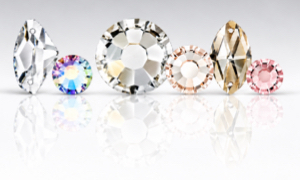
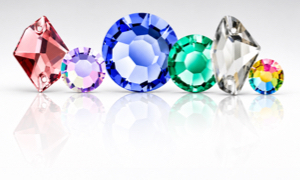
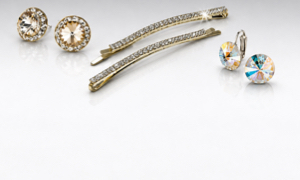
A rhinestone is a man-made imitation of a cut and polished gemstone. Centuries ago, quartz pebbles with a high lead content were found sparkling along the banks of Europe's Rhine River. These natural stones were highly coveted, and once the supply was depleted, jewelers created an imitation, aptly named the rhinestone.
Today the term describes an imitation gemstone made from crystal, glass, or plastic acrylic. Rhinestones are manufactured in the Czech Republic, Austria, Germany, and parts of Asia.
What are rhinestones made of?
Historically, the highest quality rhinestones were made from leaded crystal: glass with added ingredients, including lead, that make the material easier to cut and better at refracting light. Traditionally it was thought that the higher the lead content, the more brilliant the rhinestone.
That changed. Modern premium crystal is lead-free, and the brilliance now comes from precision cutting, facet count, and foiling rather than lead content. Every crystal brand Rhinestones Unlimited carries is lead-free genuine cut crystal, never molded acrylic or resin.
What else are rhinestones called?
Around the world, rhinestones go by several names:
- Paste, an older English term for imitation gemstones.
- Diamante, common in the United Kingdom and Australia.
- Strass, after Georg Friedrich Strass, one of the jewelers credited with the foiling technique.
- Crystal, which should only describe a rhinestone actually made of crystal material, not glass or acrylic.
Where do our rhinestones come from?
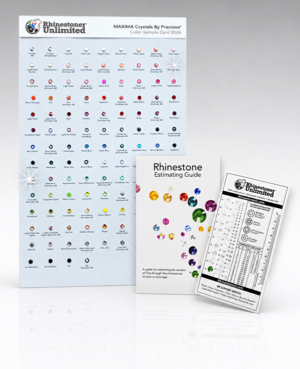
Rhinestones Unlimited carries genuine cut crystal from six brands, rooted in the same European traditions described above. Compare all six crystal brands to see how facet count, origin, and price differ, or order a color sample card to see them in hand.
FREQUENTLY ASKED QUESTIONS
Why are they called rhinestones?
They are named for the Rhine River in Europe, where sparkling quartz pebbles were once collected. When the natural supply ran out, jewelers created imitations and kept the name.
What is the difference between a rhinestone and a crystal?
Rhinestone is the broad term for an imitation gemstone, which may be crystal, glass, or acrylic. Crystal describes the material itself and should only be used when the stone is genuinely made of cut crystal.
Do rhinestones still contain lead?
Premium crystal is now lead-free. Lead was traditionally added because it made crystal easier to cut and better at refracting light, but modern lead-free recipes achieve the same brilliance. Every crystal brand we carry is lead-free.
What does AB mean on a rhinestone?
AB stands for Aurora Borealis, an iridescent coating introduced in 1956 that produces a rainbow effect across the surface of the stone. It remains one of the most popular finishes available.
Are more facets better?
Generally yes. More precisely cut facets return more light. Cut quality, foiling, and color consistency matter too, which is why a well-made 12-facet crystal can outperform a poorly cut stone with more facets.