

Rhinestone Application Guide
How to Apply Rhinestones to Leather and Suede
From western wear and dance costumes to leather shoes, handbags, belts, and an outfit for Saturday night, rhinestones can give leatherwork a beautiful finish. Start by choosing how to attach the stones; glue is one of several options.
← Back to the Rhinestone Glue Guide
Explore this guide
Choose a method · Compare glues · Preparation & care · Questions
Do Rhinestones Stick to Leather?
Yes. The strongest approach depends on the leather, the design, and how much the finished piece will flex or rub. For high-wear projects, consider a mechanical attachment before choosing glue.
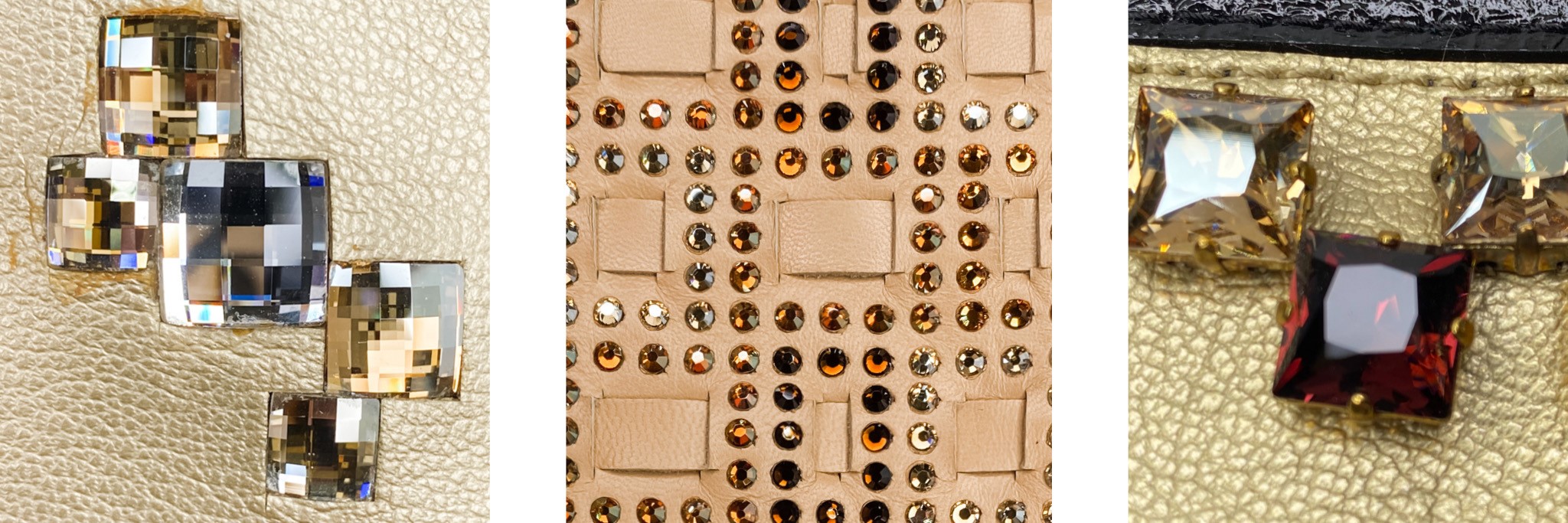
1. Metal Settings
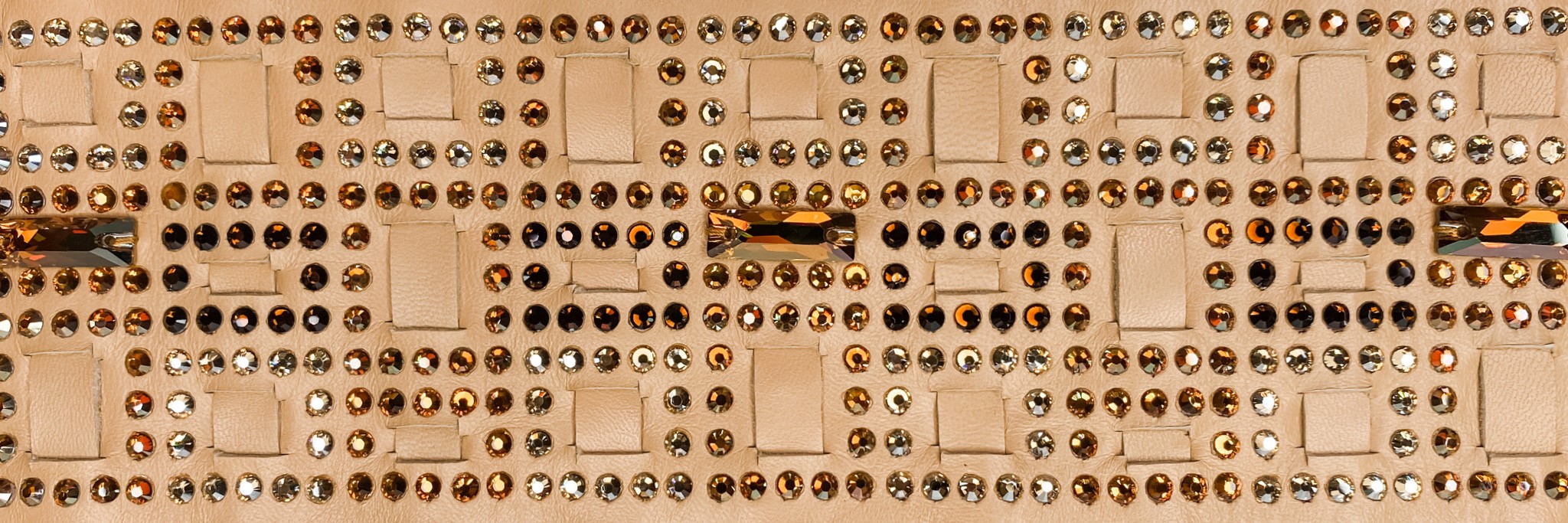
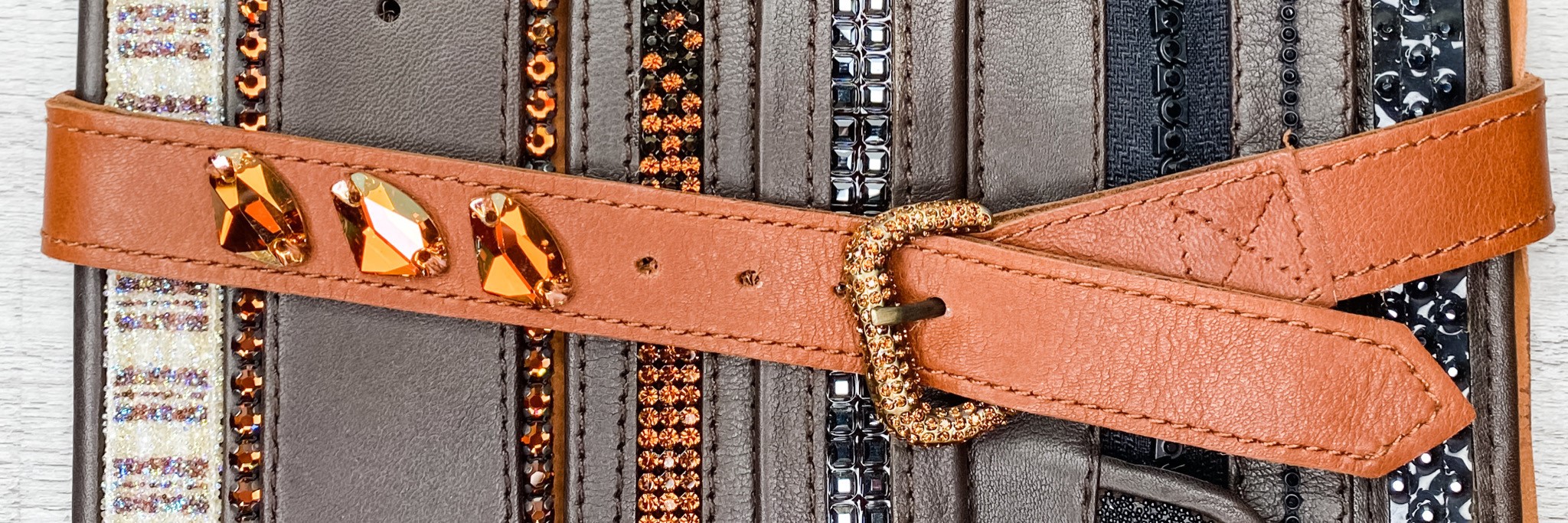
Metal settings hold a rhinestone mechanically. The original leatherwork article highlighted settings in black, silver, copper, and gold so the visible metal can become part of the design. Choose a setting that fits both the stone and the leather thickness, and test it on scrap material.
For a dog collar, horse bridle, handbag, or other piece of thicker leatherwork, one approach is to set the rhinestones into a thinner piece of leather and then stitch that piece securely onto the project. This lets you create a detailed crystallized panel without placing settings directly through the final item.
Shop rhinestone tools and metal settings →
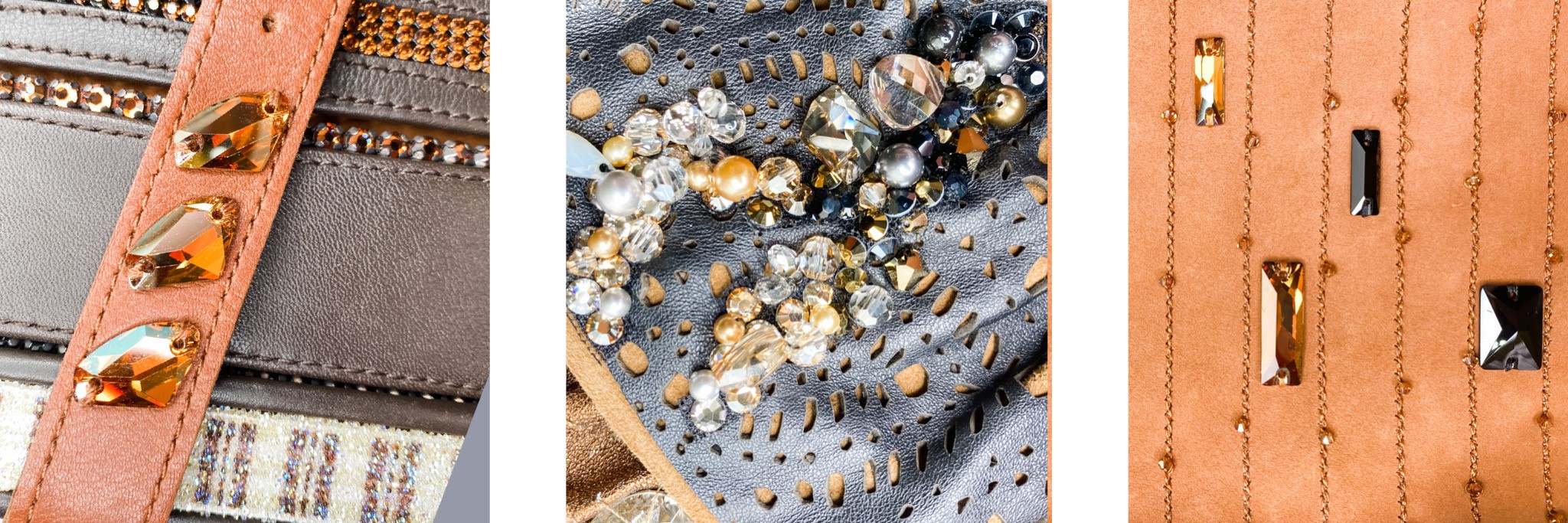
2. Sew-On Rhinestones, Beads & Buttons
Sew-on rhinestones, crystal beads, and buttons provide another mechanically attached option. Where the leather thickness and construction allow stitching, these can be especially useful for a piece that will move or see repeated wear. Plan the backing and stitch placement before making holes in the leather.
Shop rhinestones, including sew-on styles →
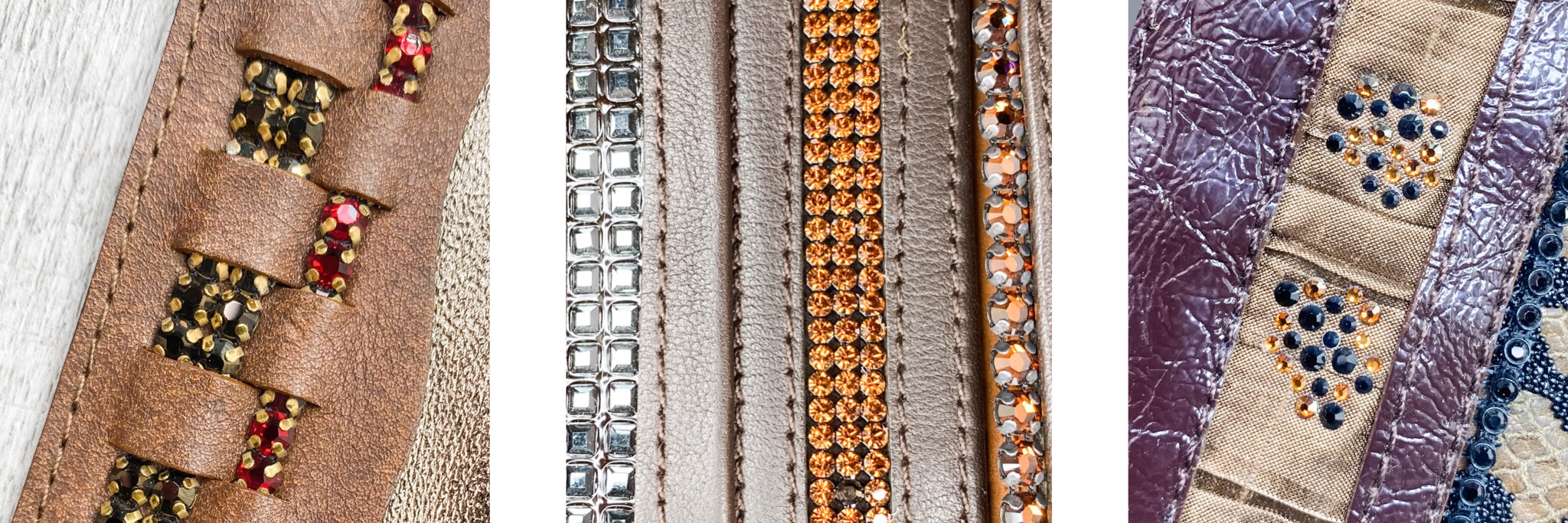
3. Rhinestone Banding or a Fabric Inset
For a different look, weave a rhinestone banding into the design or cut an opening for a crystallized fabric or appliqué inset. Metal-set banding and other trims give you room to make the leatherwork your own. Test how the insert will be stitched or otherwise secured before cutting the finished piece.
Shop rhinestone bandings, trims & appliqués →
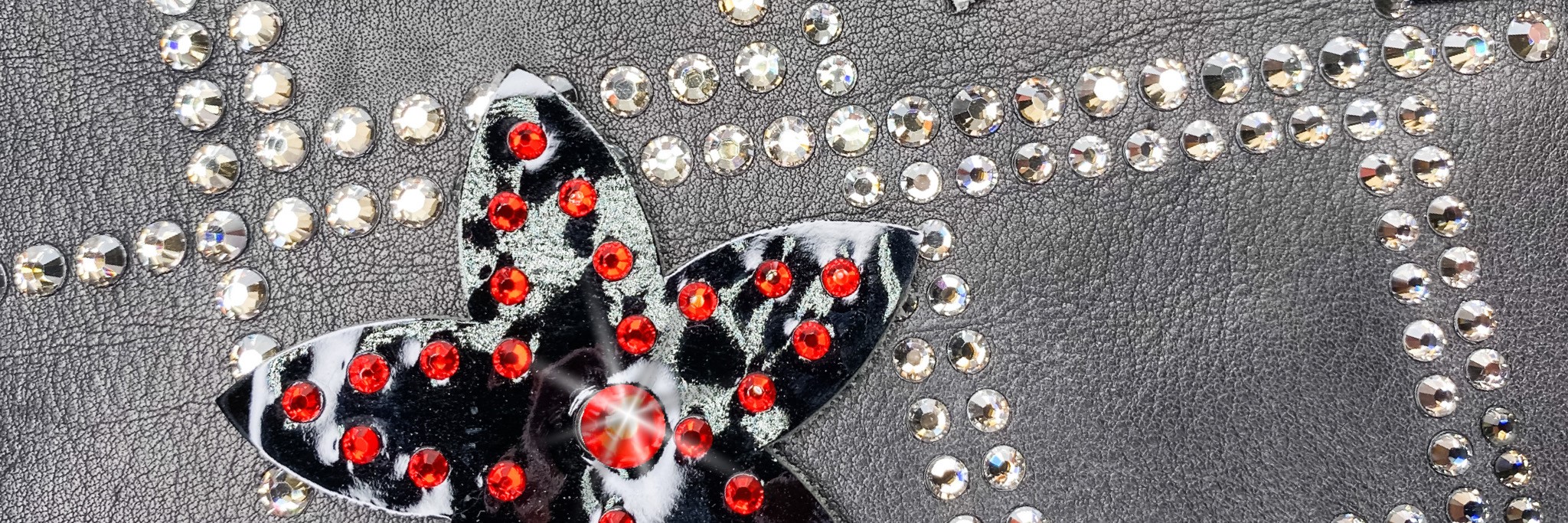
4. Glue-On Flatback Rhinestones
Glue gives you placement freedom for individual flatback rhinestones and fine details. It may be useful when a setting or needle cannot reach the chosen area. A glue listed for leather is a starting point, but the stone backing, leather finish, movement, and care routine determine whether the finished bond holds up. Test before decorating the full piece.
What Glue Works for Rhinestones on Leather?
Several adhesives in our assortment list leather or suede, including the planned SUPERTite Ninja SuperFlex. Choose by surface finish, rhinestone backing, placement, and expected wear. No listed adhesive guarantees a bond on every finished leather surface.
This chart is for genuine leather and suede. Faux leather, vinyl, polyurethane-coated material, and shiny pleather need separate testing; see Special Surfaces & Finishes →
| Glue | Shop | Details |
|---|---|---|
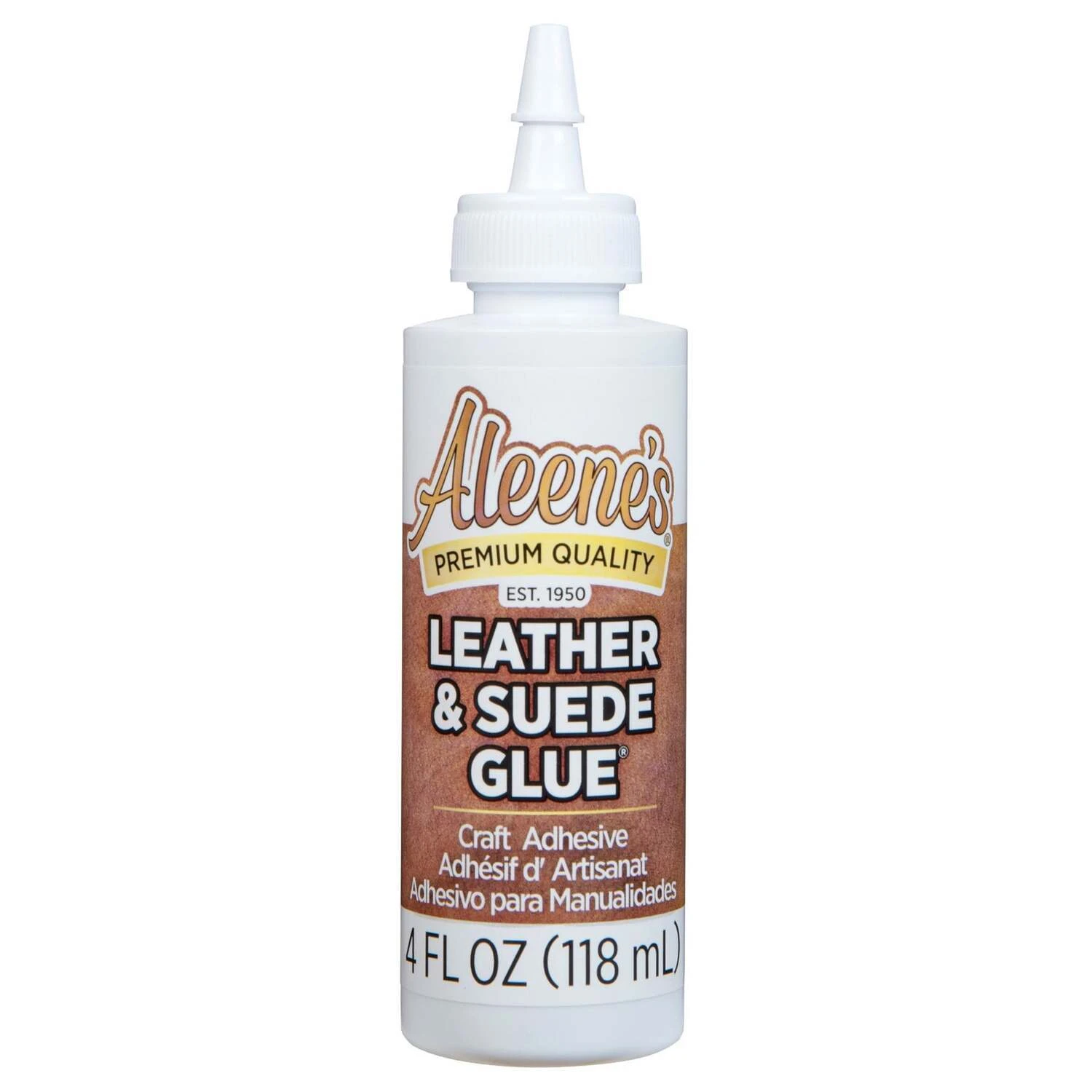 |
Aleene's Leather & Suede GlueProduct link to add | Genuine leather/suede embellishment and accessories. Formulated for leather/suede; manufacturer says it dries flexible and resists soak-through/staining. Test the rhinestone backing. |
 |
Beacon Gem-Tac | Leather shoes, bags, and accents. Beacon lists leather and rhinestones; hand-wash guidance is not a shoe-care promise. |
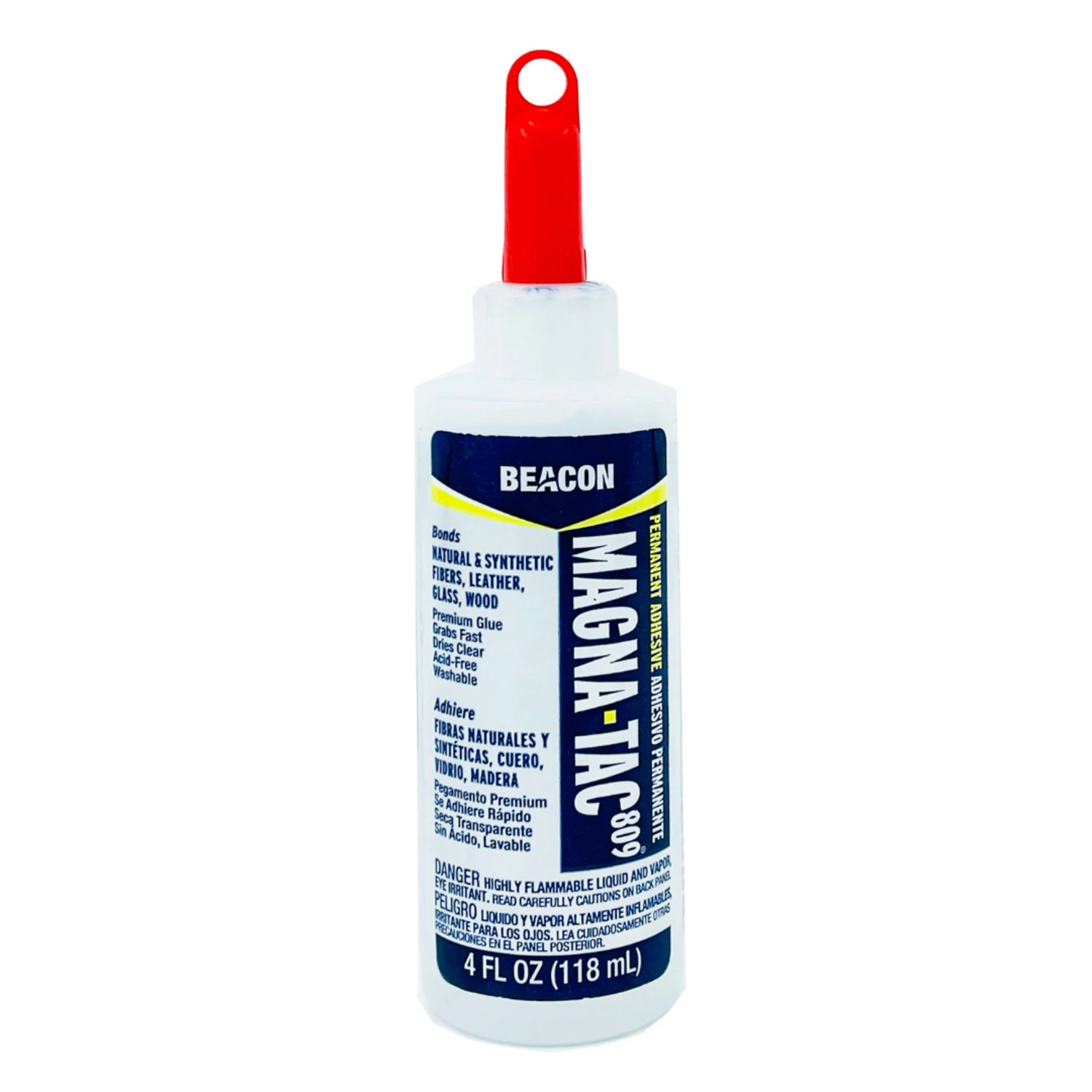 |
Beacon Magna-Tac 809Product link to add | Leather or mixed textile accessories. Beacon lists leather and fibers; test finish and repeated flex. |
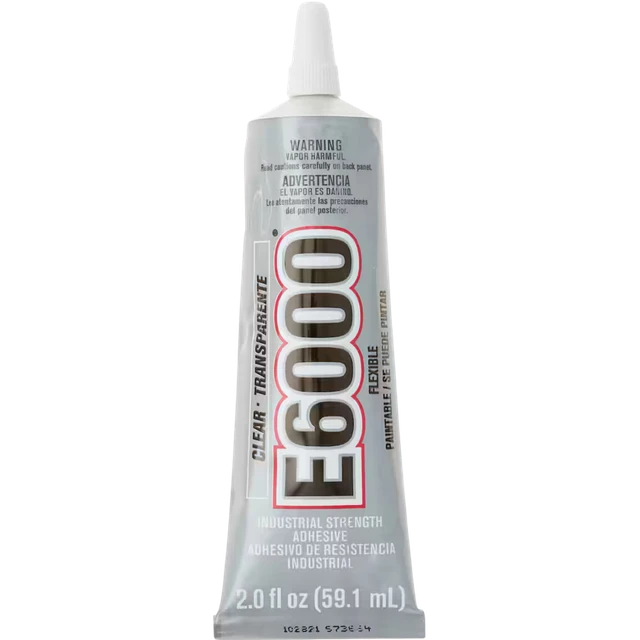 |
E6000 Original | Leather accessories, especially mixed material or metal details. Manufacturer lists leather; apply carefully to avoid marring finished surfaces. |
 |
E6000 Jewelry & Bead | Leather accessories, especially mixed material or metal details. Manufacturer lists leather; apply carefully to avoid marring finished surfaces. |
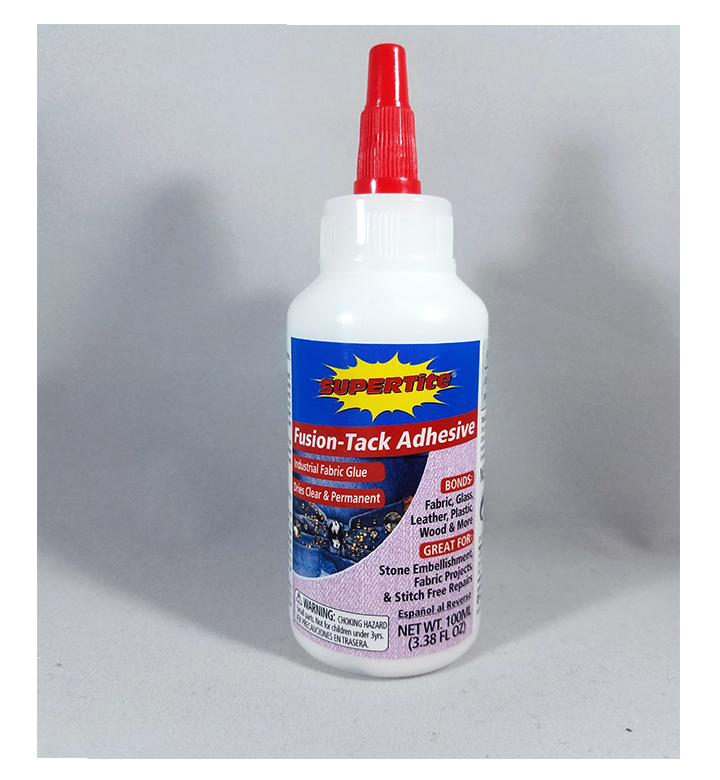 |
SUPERTite Fusion-TackComing soon | Leather accessories. Leather is listed on the bottle; confirm final label directions and test the actual finish before use. |
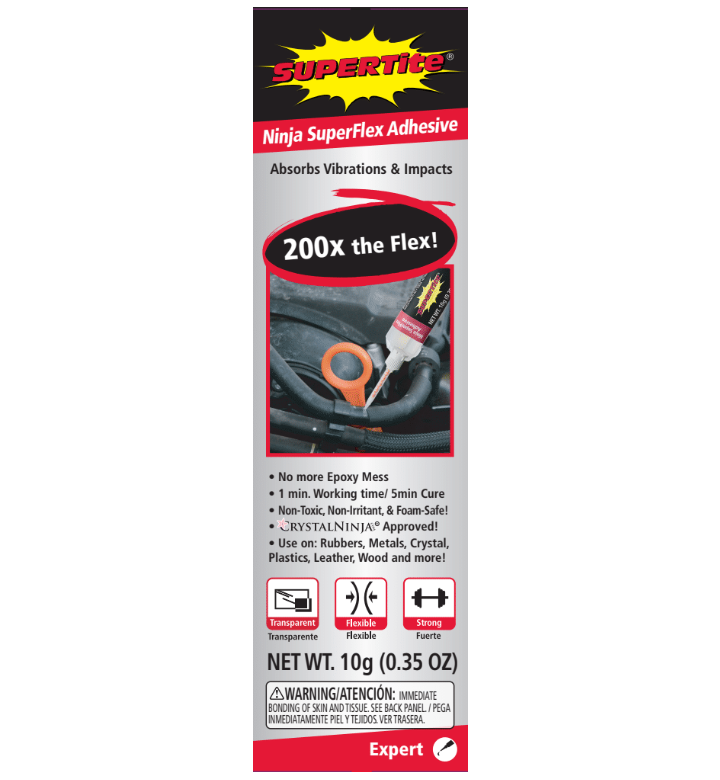 |
SUPERTite Ninja SuperFlexComing soon | Leather shoes/accessories exposed to bending or impacts. Manufacturer lists leather and impact absorption; test the actual finish and stone backing. |
Tips for Rhinestones & Leatherwork
Test, Test, Test
Practice on a scrap from the same leather when possible. If you do not have scrap, use a hidden area. Test the exact setting or glue, stone backing, finish, placement, and expected bending or rubbing. Let the sample reach the adhesive maker’s full cure time before judging it.
Mark Out Your Design
Plan where the rhinestones will go before attaching them. Test chalk or a removable marking pencil on an inconspicuous spot first, especially on suede or pale leather. Mark setting holes and stitching paths before punching or sewing. Keep a suitable cleaning cloth nearby for the material and glue you chose; a damp cloth is not safe for every leather finish or adhesive.
Consider Heat Carefully
Treat hotfix on leather and imitation leather with caution: heat and pressure can mark, stiffen, shrink, or damage leather and coatings. Use hotfix only when the leather, finish, rhinestone, and application equipment are specifically suited to the process and a test sample passes. For most projects on leather, choose settings, sewing, banding, or tested non-hotfix stones instead.
Prepare the Actual Surface
Natural oils and surface finishes can make adhesion difficult. First identify whether the glue will touch bare leather, suede, dye, paint, wax, or a protective topcoat. Follow the adhesive maker’s directions for cleaning and preparation. Alcohol swabs or sandpaper are sometimes used to remove oils or roughen a bonding area, but either can permanently change color or damage a finish. Use them only if the maker recommends the treatment and an inconspicuous test passes. Do not assume a finishing coating should be dissolved.
Allow the Full Cure Time
Do not assume every glue cures fully in 24 hours. Cure times vary by adhesive, thickness, temperature, humidity, and material; follow the specific label and allow full cure before wearing, bending, or cleaning the item. Store each glue as its maker directs; instant adhesives may require storage in a cool, dark place according to their label.
Plan for Cleaning and Wear
Do not assume the finished item can be washed or dry cleaned simply because one adhesive is described as washable. The leather, dye, finish, stones, and adhesive must all tolerate the care method. Dry cleaning may weaken a glued bond; check the adhesive and leather care instructions. For shoes, belts, and tack, test movement and abrasion where the design will actually be worn.
Show It Off
The contrast between sparkling rhinestones and rich leather works on western apparel, dance costumes, dog collars, horse tack, handbags, and everyday accessories. If a first placement does not work, revise the method on a test piece and try again. Share your finished work and tag @rhinestonesunlimited so we can see it. For color inspiration, shop rhinestones by color →.
Questions About Rhinestones on Leather & Suede
Can I rhinestone leather shoes or a handbag?
Yes. For high-wear areas, consider settings or stitching. If using glue, test a concealed area for staining or finish changes and test several stones where the item bends or rubs.
Can I glue rhinestones to suede?
Test carefully on the actual suede. Its nap and any treatment can affect placement, visibility, and adhesion. A sample will also show whether the adhesive darkens or stiffens the surface.
What about faux leather or shiny pleather?
These are coated specialty surfaces. Identify the top layer and consult the Special Surfaces guide. A glue that works on genuine leather may behave differently on vinyl or polyurethane.
Is glue stronger than metal settings or sewing?
For pieces exposed to repeated flex and abrasion, a well-chosen mechanical attachment may be more dependable. Test the particular construction rather than assuming one method suits every leather item.