
Non-Hotfix Rhinestone Application Guide
How Do You Apply Non-Hotfix Rhinestones?
Find glue and application guidance for your project.
Non-Hotfix Application Guide
What Are You Rhinestoning?
| Fabric | Leather & Suede | Metal & Jewelry | Glass & Ceramics |
| Plastic & Acrylic | Wood | Skin Or Face | Nail Art |
|
Unusual Finish? Fabric With A Special Finish |
One Glue, Several Materials? Rhinestone Glue Guide |
The best glue for rhinestones starts with the surface you are decorating. Non-hotfix rhinestones require a separately applied adhesive, and the right choice depends on the material, its finish, how much it stretches or bends, and how the finished piece will be worn or cleaned. A dance costume, leather accessory, glass tumbler, and nail design each present different challenges. Choose your material above, follow the linked application guide, and test your chosen adhesive with the actual surface and rhinestone backing before completing your project.
Before You Begin
Have You Considered The Surface And Stone Foiling?
Choose your adhesive for the surface it will touch. On a printed shirt, that may be the print rather than the fabric. On painted wood, it is the paint rather than bare wood. A strong bond between the rhinestone and the top layer will not help if that layer separates from the material beneath it.
The adhesive also needs to be compatible with the rhinestone backing. Lower quality rhinestones often will react with the glue and will fall off and leave the foiling attached to your project. In this case, it is the foiling and not the glue that is the problem.
Test Before You Decorate
- Test the actual combination. Use the same rhinestones, material, and adhesive as your finished project.
- Allow the full cure time. A surface that feels dry may not have reached its full bond strength. Check the cure time in the glue manufacturer's directions.
- Check realistic movement and care. Scratch, bend, stretch, handle, or clean the sample as the finished piece will be used.
- Follow the exact product directions. Preparation, application, ventilation, curing, and care instructions vary by formula.
A glue chart can help narrow your choices. It cannot confirm a bond to every coating, finish, or combination of materials.
Rhinestone Gluing Tools, Tips & Tricks
How Do You Apply Rhinestones Neatly Without A Mess?
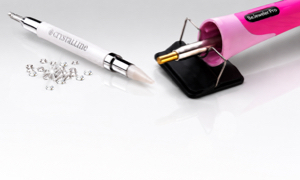
Small rhinestones are easier to place when your tools do the detailed work. A pickup tool lifts each stone with a light touch, the Magical Tray helps turn flatbacks face up, and a glue syringe gives you control over small adhesive dots. Our practical guide covers these tools, cleaner placement, and handling mistakes, including when an adhesive remover such as Un-Du may help.
Rhinestone Application Guide For Fabric
How Do You Glue Rhinestones To Fabric?
Start with the textile, then consider movement and care.
|
Portrait Image Placeholder non-hotfix-application-fabric-portrait.jpg Upload: 1200 × 1500 px A hand applying non-hotfix rhinestones to blush costume fabric. Show a pickup tool, small adhesive dots, and a protective barrier beneath the fabric. Keep the crystal facets sharp and realistic. |
For costumes, clothing, and fabric accessories, choose an adhesive compatible with the textile and the movement it needs to retain. Stretch, weave, fabric weight, surface treatments, and washing requirements all affect your choice. Protect the layers beneath your work with a suitable barrier. Individual glue dots can help preserve movement between stones. Follow the adhesive maker's directions for application and curing. Hotfix rhinestones may be another option for heat-compatible fabric. Test the fabric and any coating before applying heat. Working over a vinyl print, glitter, holographic or shiny pleather coating? Read the special finishes section before choosing your glue. |
Find The Right Glue For Your Project
Also see our Dance Costume Application Guide and Hotfix Application Guide.
Rhinestone Application Guide For Leather & Suede
How Do You Attach Rhinestones To Leather Or Suede?
Natural leather and suede items each require special consideration.
|
Portrait Image Placeholder non-hotfix-application-leather-suede-portrait.jpg Upload: 1200 × 1500 px A rhinestoned leather western accessory or handbag beside a suede sample. Include a small example of a metal setting or sew-on stone to show an alternative attachment method. |
Natural leather and suede contain oils that often prevent glues from adhering properly. The key is preparing the natural surface, testing your method, and making sure you choose an adhesive for the exact leather or suede finish. A soft suede jacket, a leather horse bridle, and a hard leather tap shoe that bends repeatedly, all present very different bonding challenges. Do not automatically sand or chemically strip your entire surface. Preparation that works on one leather finish may damage another so test a small area with your preparation method. For areas exposed to repeated flexing or wear, consider whether metal settings or sew-on rhinestones would suit the project. For faux leather which may have a vinyl or polyurethane surface, read the special finishes section. |
Learn More About Leather & Suede
Review the leather and suede glues in our Rhinestone Glue Chart. Explore metal settings and sew-on rhinestones for other attachment options.
Rhinestone Application Guide For Metal & Jewelry
What Matters When Gluing Rhinestones To Metal Or Jewelry?
Match the adhesive to the finish and the available bonding area.
|
Portrait Image Placeholder non-hotfix-application-metal-jewelry-portrait.jpg Upload: 1200 × 1500 px A close view of rhinestone earrings or a metal jewelry finding. Show the stone placement and the small area where the rhinestone backing contacts the metal. |
For metal and jewelry, consider the finish, the amount of contact beneath the stone, and how often the piece will be handled. Bare, plated, painted, and coated metal are different bonding surfaces. Follow the adhesive maker's preparation instructions for the exact finish. A small jewelry finding and a decorated metal tumbler may need different prep, application and care decisions. Research and test your surface, preparation, and glue choice. A suitable setting may provide a mechanical attachment option for some jewelry designs. Check the stone shape and the setting's requirements before choosing your method. |
Rhinestone Application Guide For Glass & Ceramics
How Do You Choose Glue For Glass Or Ceramics?
Glass, glazed ceramic, and unglazed ceramic need separate consideration.
|
Portrait Image Placeholder non-hotfix-application-glass-ceramics-portrait.jpg Upload: 1200 × 1500 px A rhinestoned glass vase or ornament beside glazed and unglazed ceramic samples. Use soft light that makes the different surface finishes visible. |
Choose a formula that lists your actual surface. A recommendation for unglazed ceramic does not automatically apply to glass, glazed pottery, or glazed tile. Consider the highest quality crystal if being applied before being fired in a kiln. Consider handling, moisture, and cleaning. Follow the maker's preparation directions, and only roughen a surface when that treatment is appropriate for both the adhesive and the item. On clear glass, excess adhesive may remain visible around the stones. Test your application amount and inspect the cured sample before decorating the full piece. Keep decoration away from food-contact areas and drinking rims unless the complete application is approved for that use. |
Rhinestone Application Guide For Plastic & Acrylic
What Glue Should You Use On Plastic Or Acrylic?
Identify the plastic before relying on a general material claim.
|
Portrait Image Placeholder non-hotfix-application-plastic-acrylic-portrait.jpg Upload: 1200 × 1500 px A clear acrylic accessory beside a rigid colored plastic item, each with a small rhinestone test area. Keep the materials and their surface clarity easy to see. |
Choose an adhesive for the specific plastic whenever possible. Acrylic, vinyl, resin, polyethylene, and polypropylene do not share the same bonding characteristics. Read the exact formula's exclusions. A label that lists plastic does not mean the product works on every polymer or coating. Test for clouding, discoloration, softening, and finish damage as well as adhesion. Clear acrylic can show a reaction even when the stone initially appears secure. For tumblers and similar items, keep decoration on appropriate exterior areas and away from drinking rims unless the complete application is specifically approved for that use. |
Rhinestone Application Guide For Wood
How Do You Attach Rhinestones To Wood?
Choose for the finish on the wood and the way the piece will be used.
|
Portrait Image Placeholder non-hotfix-application-wood-portrait.jpg Upload: 1200 × 1500 px A painted wooden letter or small sign decorated with rhinestones. Include unfinished and sealed wood samples to show how the bonding surface can differ. |
For wood projects, identify whether the adhesive will touch bare wood, paint, stain, sealer, or laminate. The strength of that finish matters as much as the glue's bond to it. A decorative sign displayed indoors has different demands from a piece that is handled frequently or exposed to moisture. Choose your formula with the finished use in mind. Test for lifting, discoloration, and damage to the finish. A stone can remain attached to a small piece of paint while the paint itself pulls away from the wood. An outdoor adhesive does not automatically make every component suitable for outdoor exposure. Compare material claims in the Rhinestone Glue Chart and check the complete project's care requirements. |
Rhinestone Application Guide For Beauty
What Should You Use For Skin, Face, Or Nail Art?
Use products intended for the specific beauty application.
|
Portrait Image Placeholder non-hotfix-application-beauty-portrait.jpg Upload: 1200 × 1500 px A portrait featuring a small cheek rhinestone design and a rhinestone manicure. Keep stones away from the eyes and lips, with the face and nails clearly visible. |
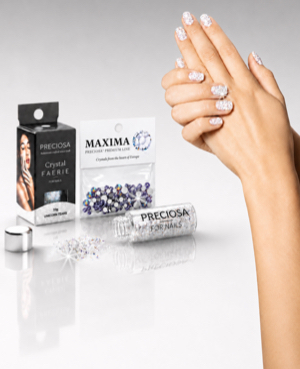
Skin Or FaceUse an adhesive specifically intended for skin application. Craft and industrial rhinestone glues are not substitutes for skin adhesives. Follow the product's directions for placement, wear, removal, and use near the eyes. Eyelash Adhesive and Spirit Gum, used for applying theatrical masks, are two adhesives to consider. Nail ArtChoose a nail adhesive or LED/UV gel adhesive for nails. Stone size, placement, curing, and removal should follow the nail product maker's directions. |
| Shop Crystals For Nails | Shop Gel Nail Adhesive |
Special Surfaces & Finishes
What Changes When The Surface Has A Coating Or Print?
Horizontal Image Placeholder
non-hotfix-application-special-finishes-horizontal.jpg
Upload: 1983 × 793 px | Aspect ratio: approximately 2.5:1
Six surface samples: screen print, heat-transfer vinyl, holographic coating, sequins, glitter, and faux leather. Show rhinestones resting on the actual top layer, with each finish clearly recognizable.
A coating or print changes the surface your glue touches. You need a bond between the rhinestone and that top layer, and the top layer must remain securely attached to the material beneath it.
Screen Printing & Vinyl Transfers
Test both the adhesive's bond to the print or transfer and the attachment of that layer to the fabric. If the design allows, placement on exposed fabric may provide a more successful bonding surface. A successful test on bare fabric does not confirm compatibility on the printed area.
Holographic & Metallic Coated Fabric
Test for the glue and rhinestone causing a lifting of the finish, and then a release of the rhinestone from the garment. The adhesive may bond to the coating while the adhesive reacts with the coating and then separates from its base fabric. Many of these sparkly costume fabrics are difficult. From our experience, the only glue that might work is E6000 or a similar industrial adhesive. Make sure to test a few glues before beginning the project.
Sequins & Glitter
Determine whether the adhesive will touch a solid sequin, loose glitter, a glitter coating, or the fabric between embellishments. Loose particles can release from the surface with the stone still attached to them. Check the stability of the layer beneath each placement.
Faux Leather, Pleather & Shiny Coatings
Faux leather may have a vinyl or polyurethane surface. These fabrics also prove to be difficult. An industrial adhesive, such as E6000, may work but we warn against gluing to these types of fabrics. Check the exact formula's material guidance and test for surface damage, discoloration, and peeling after movement.
Silicone
Do not rely on a general plastic or rubber claim for silicone. Ask the adhesive manufacturer to confirm compatibility with your exact silicone surface and the rhinestone backing before proceeding. Very few glues work with silicone. Beacon Power-Tac or other similar industrial adhesive may work but extensive testing is recommended.
Allow the complete test sample to cure, then check movement and care as the finished item will experience them. Inspect both the stone's bond and the condition of the layer underneath.
Compare Rhinestone Adhesives
Where Can You Compare Rhinestone Glues?
Use our Rhinestone Glue Chart to compare the materials listed for each adhesive formula. Each glue appears once rather than repeating every bottle size, making it easier to compare your options.
The chart is a starting point. Check the exact product's directions, material exclusions, curing instructions, and care requirements before choosing a formula for your project.
Frequently Asked Questions
Non-Hotfix Rhinestone Application FAQs
What Is The Best Glue For Non-Hotfix Rhinestones?
The best choice depends on the surface, its finish, the rhinestone backing, and the way the finished item will be used and cleaned. Use the Rhinestone Glue Chart to narrow your choices, then test the actual combination before completing your project.
What Is The Difference Between Hotfix And Non-Hotfix Rhinestones?
Hotfix rhinestones have a heat-activated adhesive backing. Non-hotfix rhinestones require a separately applied adhesive or another suitable attachment method. For heat-compatible fabric, see our Hotfix Application Guide.
What Should I Look For In A Rhinestone Glue For Stretch Fabric?
Choose a formula intended for your fabric and the repeated movement the garment needs. Individual adhesive dots can help preserve movement between stones. Follow the product directions, allow a full cure, and stretch-test a sample of the actual fabric. Our fabric section covers the material considerations.
Can I Glue Rhinestones Onto Screen Printing, Glitter, Or Vinyl?
These surfaces need their own compatibility tests. Check the adhesive's bond to the top layer and that layer's attachment to the material beneath it. A stone can remain bonded to a coating that peels away. Read the special finishes section before applying stones.
Can The Same Rhinestone Glue Work On Several Materials?
Some formulas list several materials, but that does not confirm compatibility with every finish or coating in those categories. Read the exact product directions and test each material separately.
How Long Should Rhinestone Glue Dry Before Wearing Or Washing?
Follow the exact adhesive's directions. Initial drying, full curing, and the waiting period before washing may be different. Adhesive thickness, temperature, and humidity can also affect the process.
Can I Wash An Item After Gluing Rhinestones To It?
Follow the care requirements for the adhesive, rhinestones, material, and finish, including the required wait before washing. Test your planned care method on a sample. A waterproof claim alone does not mean an item is suitable for machine washing, dishwashing, or dry cleaning.
Why Do Glued Rhinestones Fall Off?
Possible causes include an incompatible adhesive, surface contamination, incomplete curing, repeated movement, or a weak coating beneath the stone. Inspect where the bond failed: at the rhinestone backing, at the surface, or within a layer of paint, print, or coating.
Can I Use Craft Rhinestone Glue On My Skin, Face, Or Nails?
Use products specifically intended for the beauty application. General craft and industrial rhinestone adhesives are not substitutes for skin adhesives or nail-art systems. See our skin, face, and nail section for more information.