

Rhinestone Application Guide
How to Apply Rhinestones to Leather and Suede
From western wear and dance costumes to leather shoes, handbags, belts, and an outfit for Saturday night, rhinestones can give leatherwork a beautiful finish. Start by choosing how to attach the stones; glue is one of several options.
Explore this guide
Choose Your Method
| Metal Settings | Sew-On Rhinestones | Rhinestone Banding | Glue-On |
| Preparation & Care | A Note About Hotfix Rhinestones | ||
Do Rhinestones Stick To Leather?
Yes. The strongest approach depends on the leather, the design, and how much the finished piece will flex or rub. For high-wear projects, consider a mechanical attachment before choosing glue.
Metal Settings
How do Rhinestones with Metal Settings work on Leather?
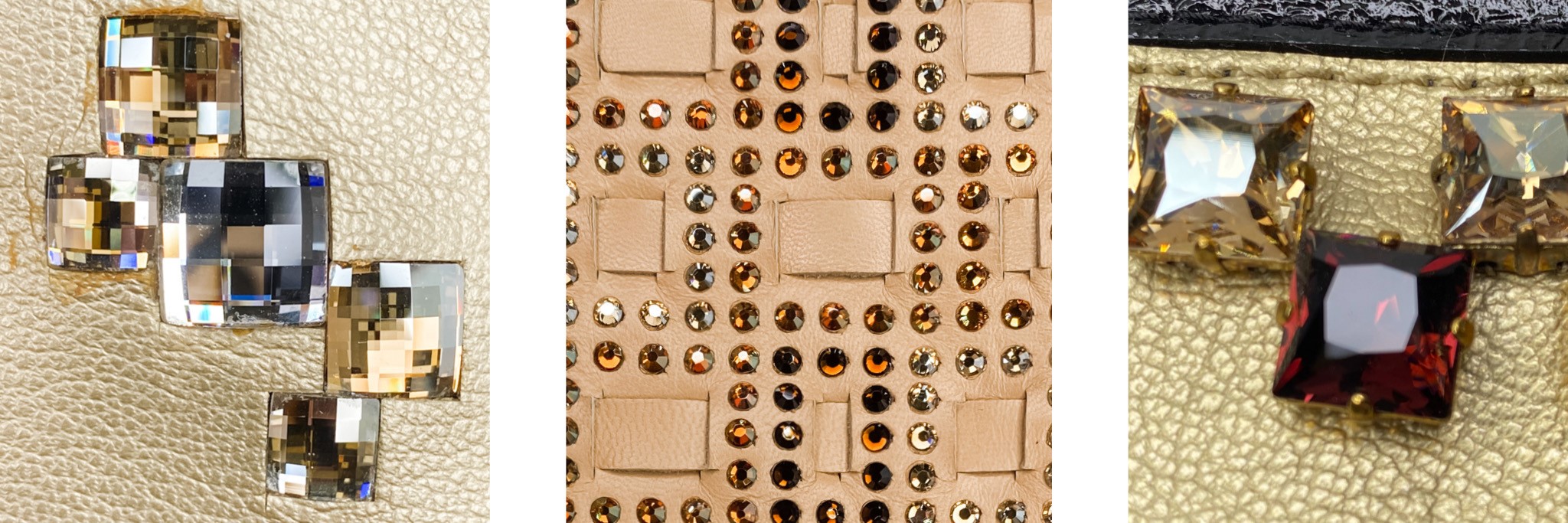
Metal settings hold a rhinestone mechanically. The original leatherwork article highlighted settings in black, silver, copper, and gold so the visible metal can become part of the design. Choose a setting that fits both the stone and the leather thickness, and test it on scrap material.
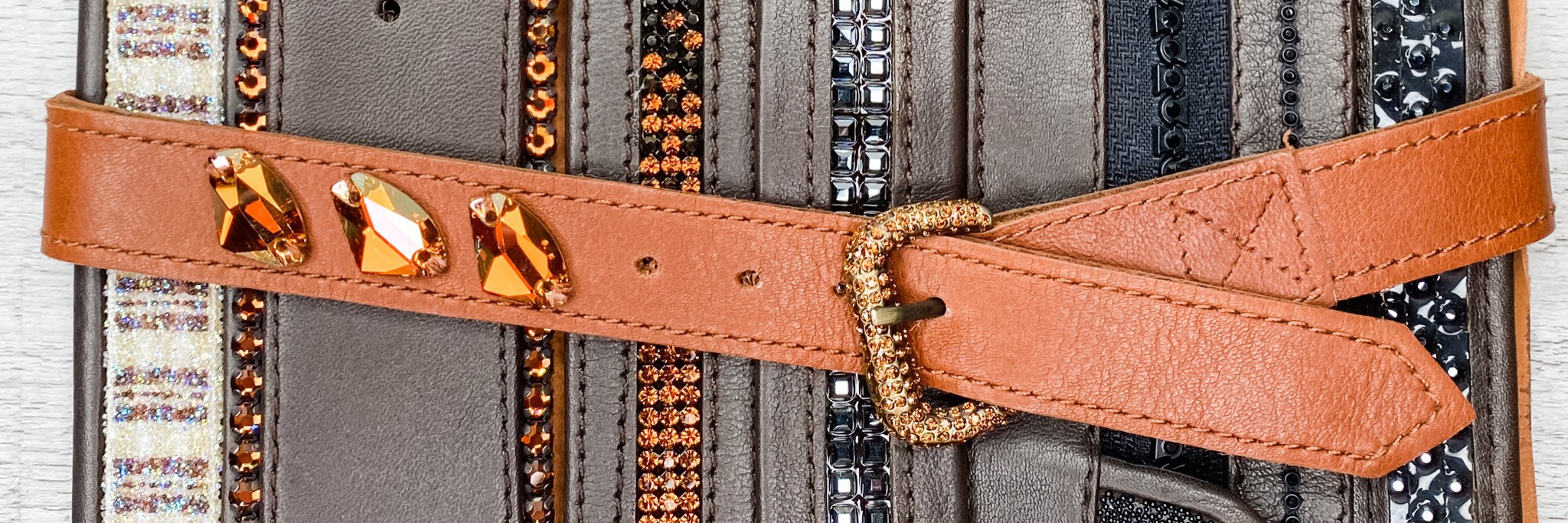
For a dog collar, horse bridle, handbag, or other piece of thicker leatherwork, one approach is to set the rhinestones into a thinner piece of leather and then stitch that piece securely onto the project. This lets you create a detailed crystallized panel without placing settings directly through the final item.
Shop rhinestone tools and metal settings →
Sew-On Rhinestones
Do Sew-On Rhinestones, Beads & Buttons Work on Leather?
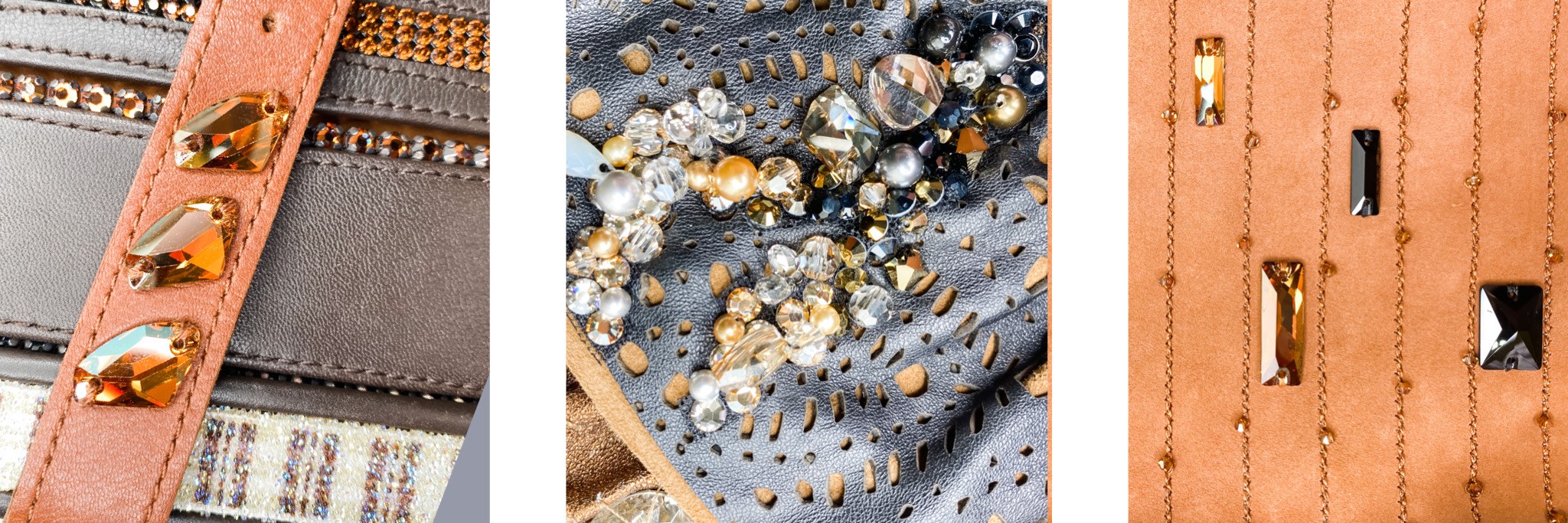
Sew-on rhinestones, crystal beads, and buttons provide another mechanically attached option. Where the leather thickness and construction allow stitching, these can be especially useful for a piece that will move or see repeated wear. Plan the backing and stitch placement before making holes in the leather.
Shop rhinestones, including sew-on styles →
Rhinestone Banding
How do I use Rhinestone Banding inset in my Leather Work?
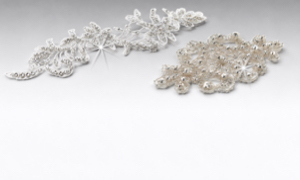
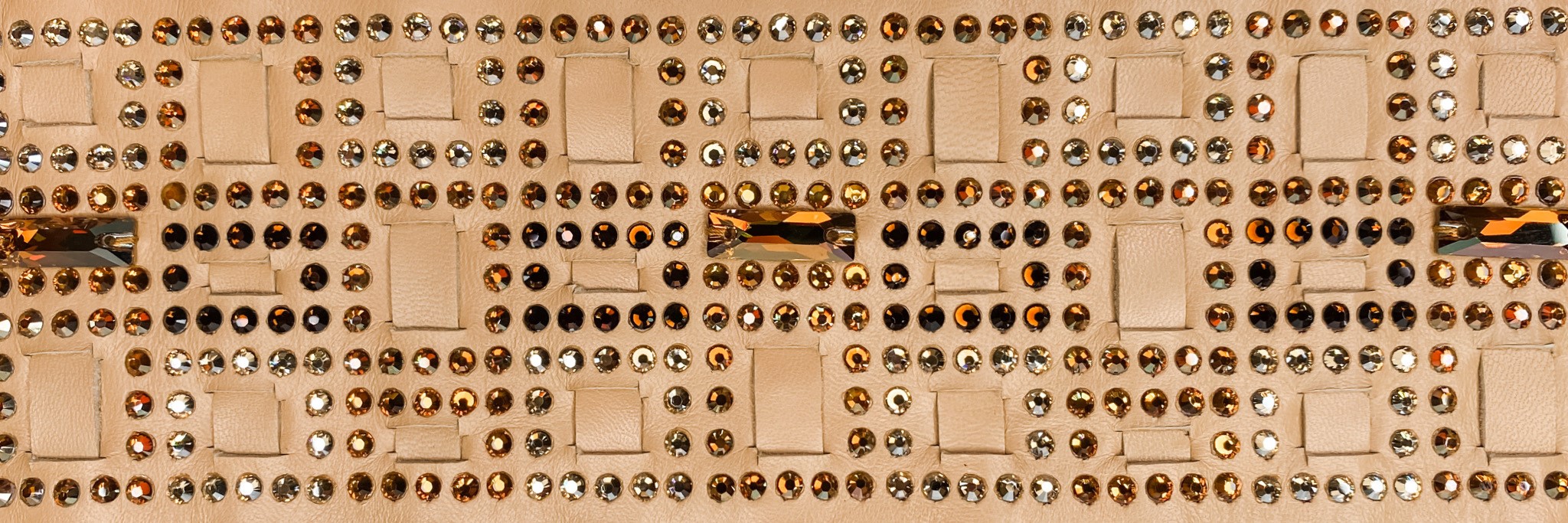
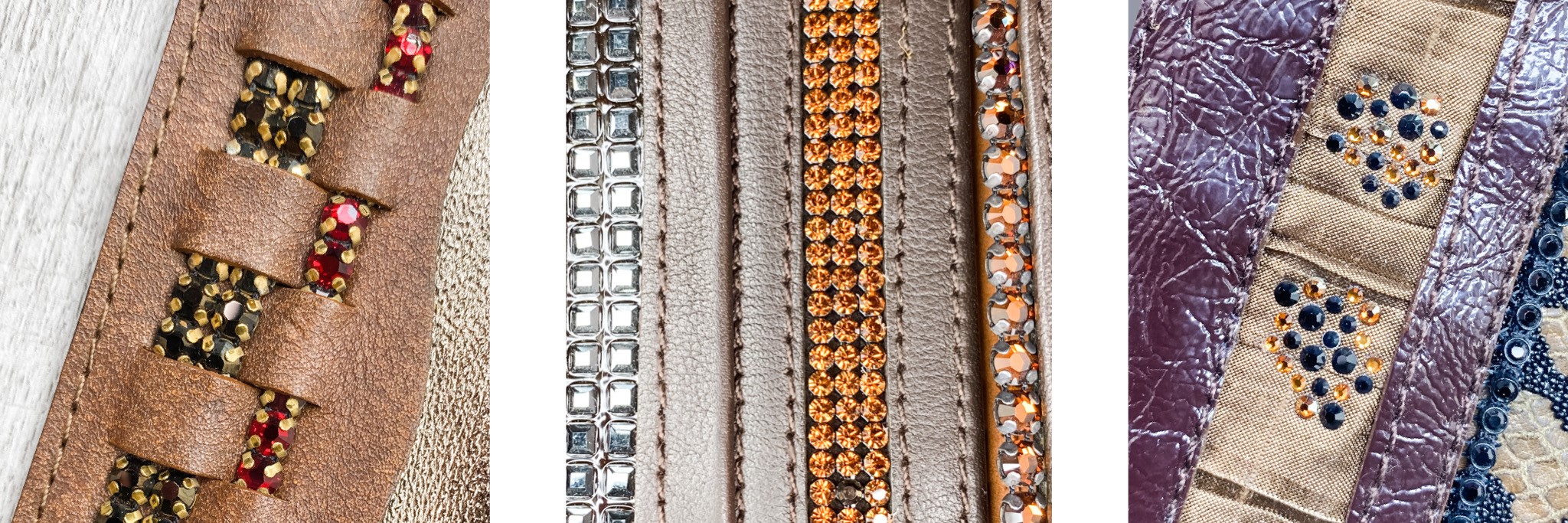
For a different look, weave a rhinestone banding into the design or cut an opening for a crystallized fabric or appliqué inset. Metal-set banding and other trims give you room to make the leatherwork your own. Test how the insert will be stitched or otherwise secured before cutting the finished piece.
Shop rhinestone bandings, trims & appliqués →
Glue-On FLATBACK RHINESTONES
Can I glue on Rhinestones to Leather or Suede?
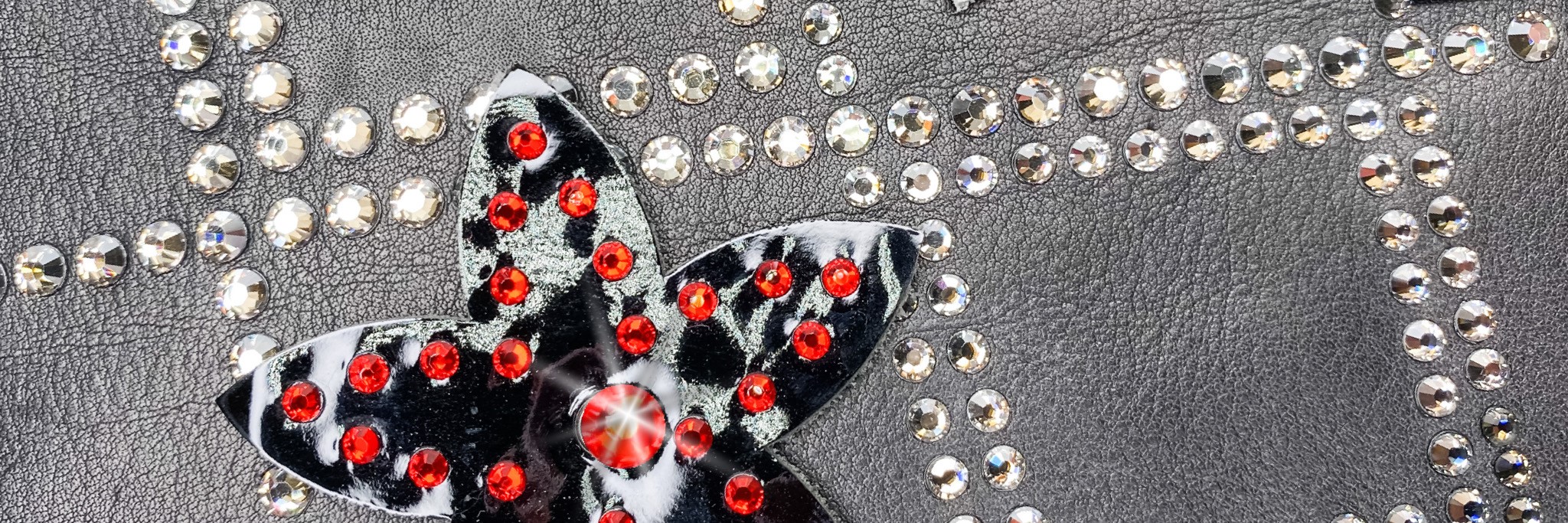
Yes, but with caution. Glue gives you placement freedom for individual flatback rhinestones and fine details. It may be useful when the preferred method of a metal setting or needle cannot reach the chosen area. A glue listed for leather is a starting point, but the stone backing, leather finish, movement, and care routine determine whether the finished bond holds up. Preparation with a chemical stripping agent or sand paper to remove the natural oils is necessary. Proceed with caution by testing your leather, glue, and rhinestones before decorating the full piece.
What Glue Works For Rhinestones On Leather?
Several adhesives in our assortment list leather or suede. Choose by surface finish, rhinestone backing, placement, and expected wear. No listed adhesive guarantees a bond on every finished leather surface and preparation of the leather with chemical stripping or sanding is important.
This chart is for genuine leather and suede. Faux leather, vinyl, polyurethane-coated material, and shiny pleather need separate testing; see Rhinestone Glue Guide →.
| Glue | Shop | Details |
|---|---|---|
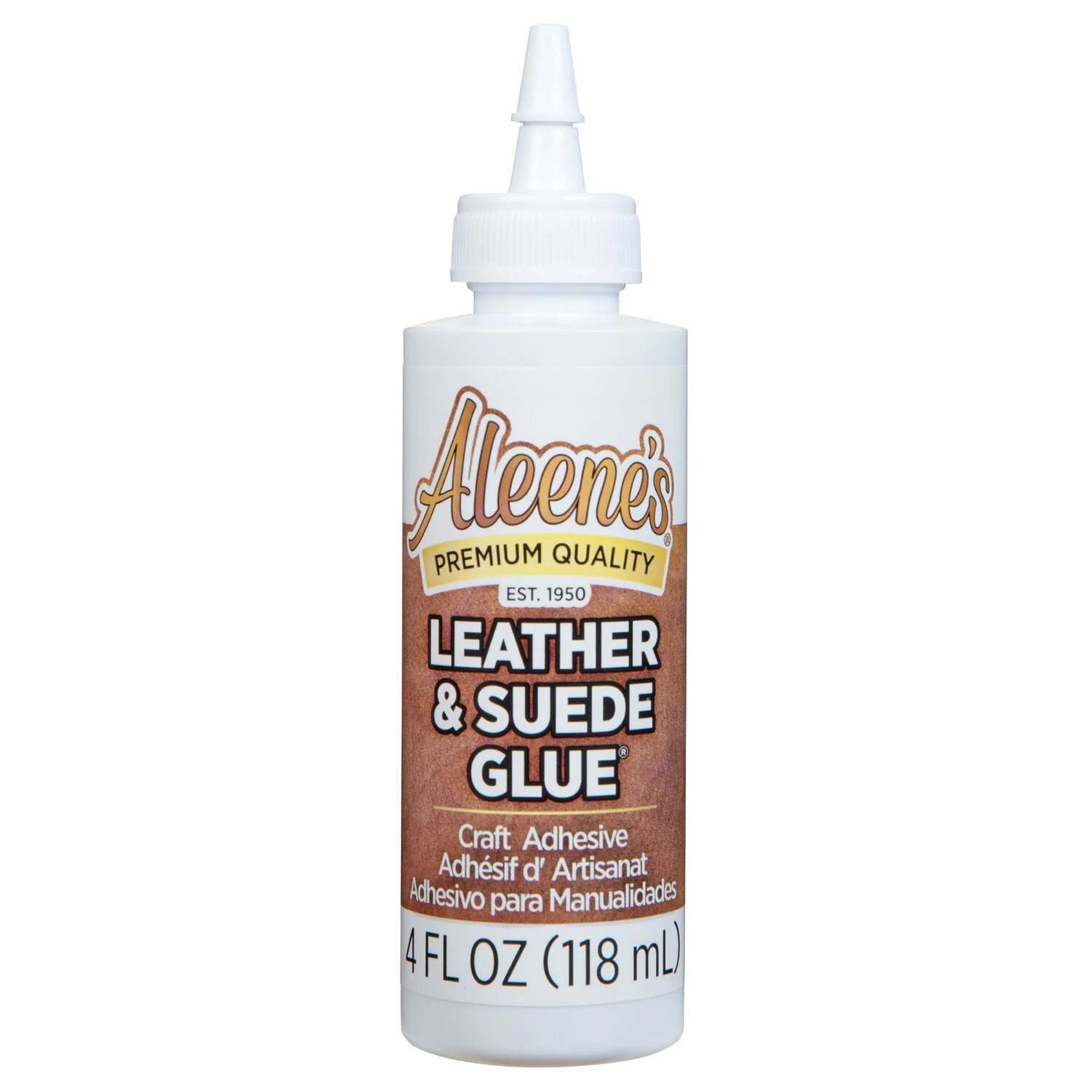 |
Aleene's Leather & Suede Glue | Genuine leather/suede embellishment and accessories. Formulated for leather/suede; manufacturer says it dries flexible and resists soak-through/staining. Test the rhinestone backing. |
 |
Beacon Gem-Tac | Leather shoes, bags, and accents. Beacon lists leather and rhinestones; hand-wash guidance is not a shoe-care promise. |
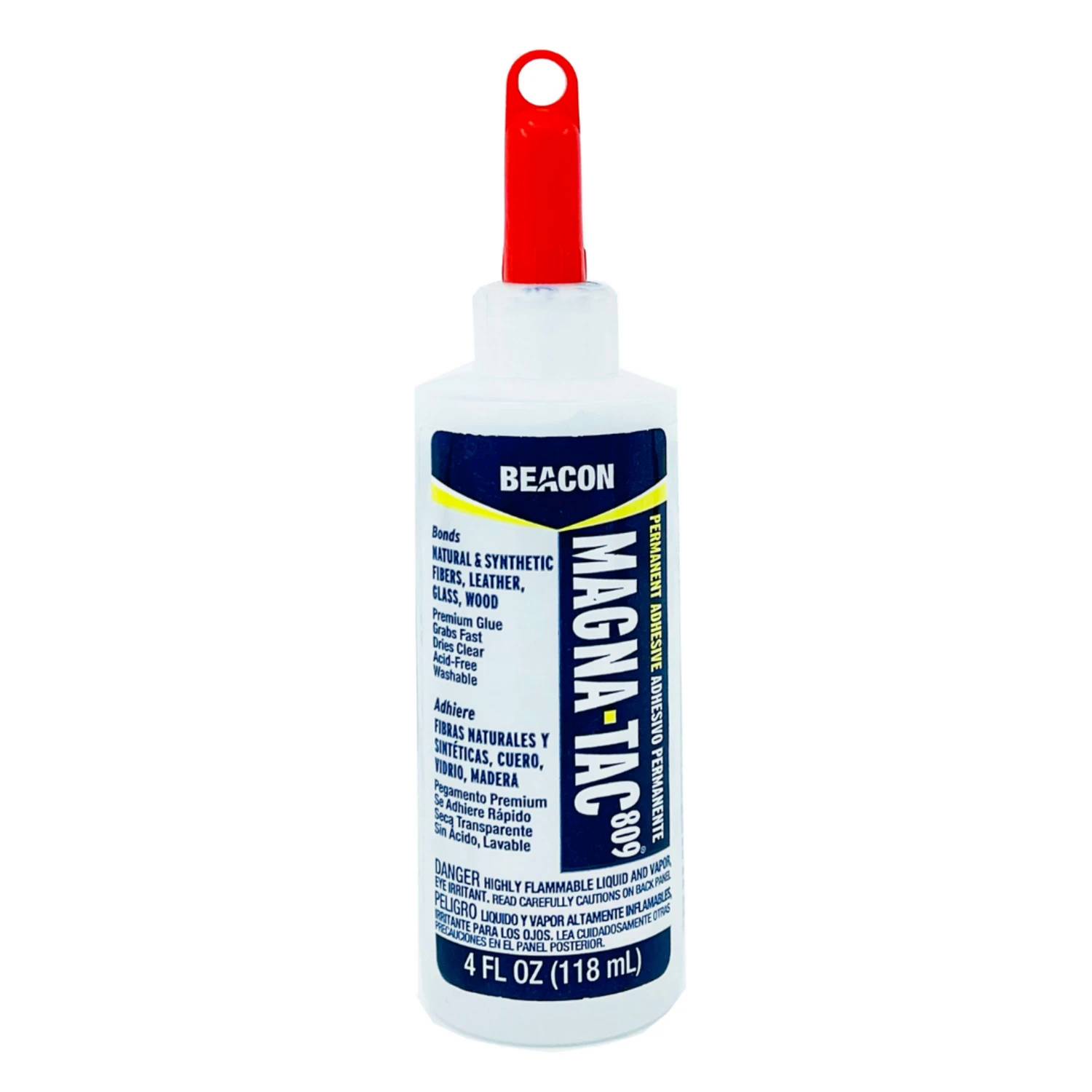 |
Beacon Magna-Tac 809 | Leather or mixed textile accessories. Beacon lists leather and fibers; test finish and repeated flex. |
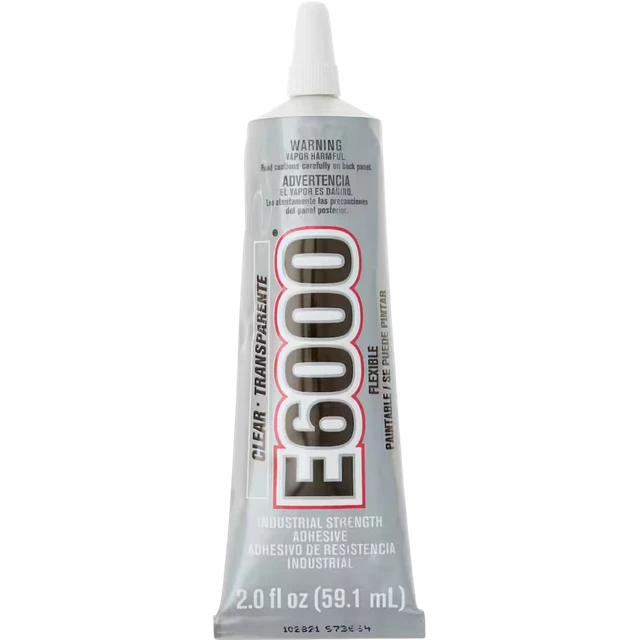 |
E6000 Original | Leather accessories, especially mixed material or metal details. Manufacturer lists leather; apply carefully to avoid marring finished surfaces. |
 |
E6000 Jewelry & Bead | Leather accessories, especially mixed material or metal details. Manufacturer lists leather; apply carefully to avoid marring finished surfaces. |
Tips for Rhinestones & Leatherwork
Test, Test, Test
Practice on a scrap from the same leather when possible. If you do not have scrap, use a hidden area. Test the exact setting or glue, stone backing, finish, placement, and expected bending or rubbing. Let the sample reach the adhesive maker’s full cure time before judging it.
Mark Out Your Design
Plan where the rhinestones will go before attaching them. Test chalk or a removable marking pencil on an inconspicuous spot first, especially on suede or pale leather. Mark setting holes and stitching paths before punching or sewing. Keep a suitable cleaning cloth nearby for the material and glue you chose; a damp cloth is not safe for every leather finish or adhesive.
Prepare the Leather Surface for Glue-On Rhinestones
Natural oils and surface finishes can make adhesion difficult. Use a chemical or manual leather stripping method before applying rhinestones with glue. Identify whether the glue will touch bare leather, suede, dye, paint, wax, or a protective topcoat. Follow the adhesive maker’s directions for cleaning and preparation.
Leather Deglazer, alcohol swabs or sandpaper can be used to remove oils or roughen a bonding area, but could permanently change color or damage a finish. Research and test chemical leather strippers or manual leather stripping tools before proceeding with a project.
Plan for Cleaning and Wear
Do not assume the finished item can be washed or dry cleaned simply because one adhesive is described as washable. The leather, dye, finish, stones, and adhesive must all tolerate the care method. Dry cleaning may weaken a glued bond; check the adhesive and leather care instructions. For shoes, belts, and tack, test movement and abrasion where the design will actually be worn.
Show It Off
The contrast between sparkling rhinestones and rich leather works on western apparel, dance costumes, dog collars, horse tack, handbags, and everyday accessories. If a first placement does not work, revise the method on a test piece and try again. Share your finished work and tag @rhinestonesunlimited so we can see it. For color inspiration, shop rhinestones by color →.
Hotfix Rhinestones
Can You Use Hotfix Rhinestones On Leather?
We generally do not recommend hotfix rhinestones for leather or suede. Approach hotfix on leather, suede and imitation leather with caution: heat and pressure can mark, stiffen, shrink, or damage leather and coatings. Use hotfix only when the leather, finish, preparation of the leather surface, rhinestones, and application equipment are specifically suited to the process and a test sample passes. For most projects on leather, choose settings, sewing, banding, or tested glue with non-hotfix stones instead.
Questions About Rhinestones on Leather & Suede
Can I Rhinestone Leather Shoes Or A Handbag?
Yes. For high-wear areas, consider settings or stitching. If using glue, test a concealed area for staining or finish changes and test several stones where the item bends or rubs.
Can I Glue Rhinestones To Suede?
Test carefully on the actual suede. Its nap and any treatment can affect placement, visibility, and adhesion. A sample will also show whether the adhesive darkens or stiffens the surface.
What About Faux Leather Or Shiny Pleather?
These are coated specialty surfaces. Identify the top layer and consult the Rhinestone Glue Guide. A glue that works on genuine leather may behave differently on vinyl or polyurethane.
Is Glue Stronger Than Metal Settings Or Sewing?
For pieces exposed to repeated flex and abrasion, a well-chosen mechanical attachment may be more dependable. Test the particular construction rather than assuming one method suits every leather item.