
Do Rhinestones Survive the Washing Machine?
Posted by Rhinestones Unlimited on Sep 24th 2026
EDUCATION
Do Rhinestones Survive the Washing Machine?
Yes, if they were applied correctly and washed with a little care.
Rhinestones can survive the washing machine, but survival depends on two things: how they were attached in the first place, and how the item is washed afterward. A correctly applied stone, whether glued, hotfixed, sewn, or set in metal, can hold up through repeated washes. The most common causes of rhinestones falling off in the wash aren't the washing machine itself, they're skipped steps: the wrong glue, a rushed cure time, harsh detergent, or a hot, aggressive wash cycle.
QUICK REFERENCE
| Best attachment method for washability | Correctly applied hotfix, one of the strongest fabric adhesives available |
| Glues to avoid | Super glue and other isocyanate glues, anything containing acetone, hot glue |
| Washing setting | Gentle cycle, cold water, inside out |
| Safest option | Handwashing, especially for heavily embellished pieces |
01
Does the attachment method affect how well rhinestones survive washing?
|
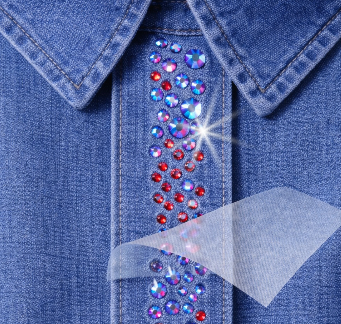
Yes, significantly. There are four main ways to attach flatback rhinestones: adhesive, hotfix, sewing, and metal settings. Each holds up differently in the wash.
|
 |
In other words, the washing machine isn't the real variable, the attachment method and how well it was executed is.
02
Does the quality of the rhinestone itself affect how it holds up in the wash?
 |
Yes, more than most people expect. A rhinestone's underside, the foiling that gives it sparkle, is also a structural layer, and how well it's bonded and protected has a direct effect on whether the stone survives repeated washing. Lower-quality or unprotected foiling breaks down under heat, moisture, and wear, which is one of the most common reasons a stone clouds, dulls, or separates from a garment over time, independent of the glue or attachment method used. This is also why two rhinestones can look identical in the package and behave completely differently after a few washes. Preciosa® Chaton Rose MAXIMA, for example, is engineered with a DuraFoiling™ layer specifically designed to resist peeling, flaking, and lifting, and is machine-wash tested as part of its durability testing, alongside sweat-resistance and temperature shock testing. |
A weak foil layer isn't something you can spot by looking at a stone before it's applied. It shows up later, after a few washes, a season of sweat, or a hot iron, which is exactly why crystal quality matters as much for long-term wear as it does for how a piece looks on day one.
03
Which glue holds up best when an item goes through the wash?
For rhinestones attached with adhesive, the glue itself is often the deciding factor. Look for a glue formulated to stay flexible after curing, which matters just as much as raw strength, a rigid bond is more likely to crack or pop loose in the wash than one that flexes with the fabric.
Just as important is what to avoid:
- Isocyanate glues, such as instant adhesives and super glue
- Any glue containing acetone
- Hot glue
These either dry too brittle to survive fabric movement or break down under the heat and agitation of a wash cycle. Whatever glue you use, test it on a scrap of your actual fabric first, and give it the full cure time on the label before the item ever sees the inside of a washing machine.
04
How should I actually wash an item that has rhinestones on it?
Even a well-applied rhinestone benefits from a gentler wash. A few habits make a real difference:
- Turn the item inside out. This creates a barrier between the stones and the machine's agitator or other clothing, reducing the chance of snagging or dislodging.
- Use a mild detergent. Strong detergents can deteriorate the glue or fabric holding the rhinestones in place over time.
- Skip prewash sprays. They're harsh on both the rhinestones and the adhesive underneath them.
- Choose the gentle cycle and cold water. A slower spin speed means less agitation, and cold water protects fabric and adhesive integrity better than warm or hot.
- Consider handwashing. For heavily embellished or delicate pieces, a cold-water hand wash with gentle detergent is the safest option of all.
None of these steps are complicated, but skipping them is one of the most common reasons a rhinestone that should have survived the wash didn't.
05
What actually causes rhinestones to fall off in the wash?
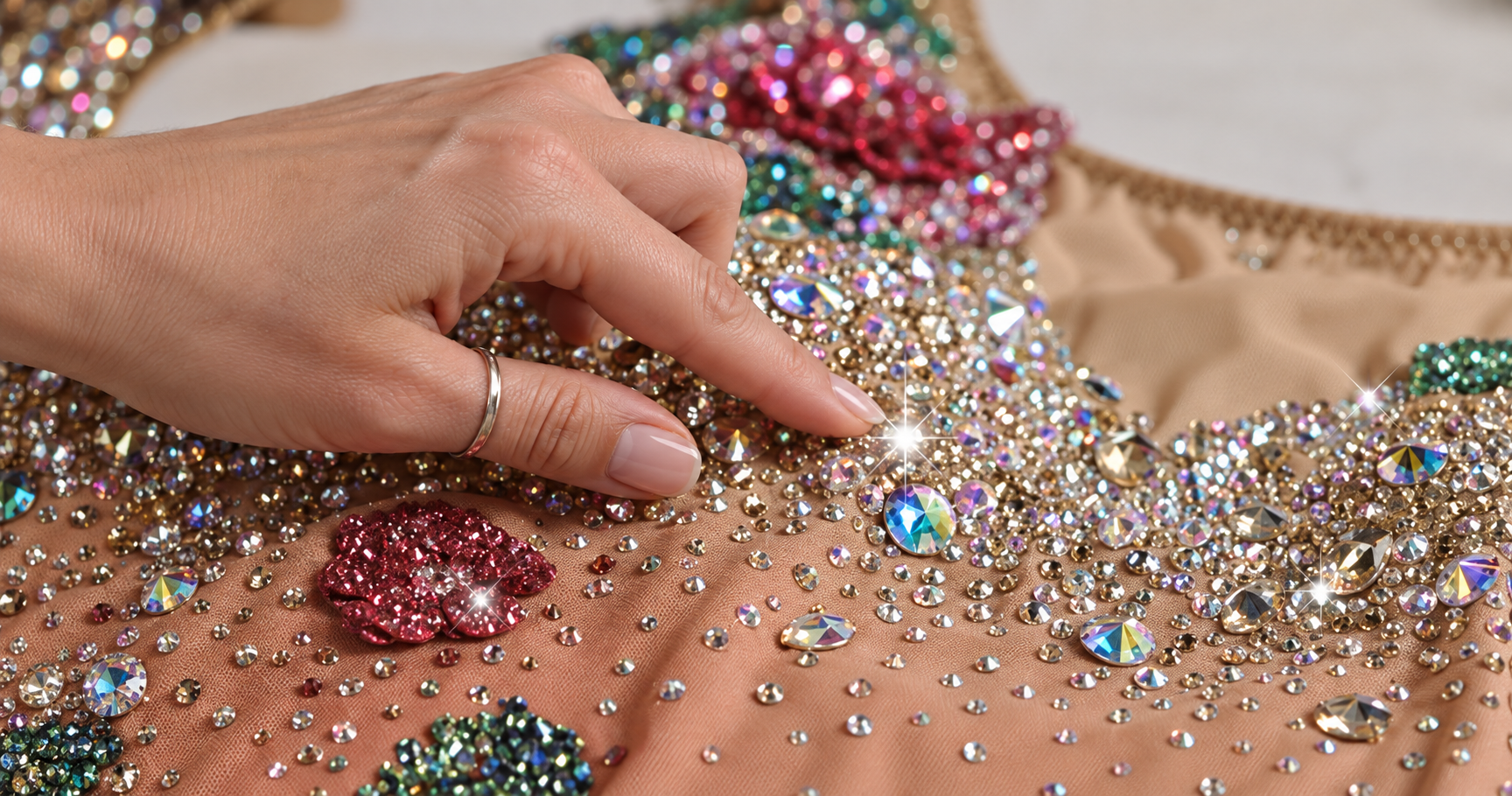
It usually comes down to one of a few preventable issues, not the washing machine being inherently too harsh for rhinestones:
- The wrong glue was used for the surface or crystal type
- The glue didn't get its full cure time before the first wash
- A harsh detergent or prewash spray broke down the adhesive
- The item was washed on a hot, high-agitation cycle instead of gentle and cold
- The item wasn't turned inside out, exposing stones directly to the agitator
Address those five, and most rhinestone-embellished pieces come through the wash looking exactly as they went in.
FREQUENTLY ASKED QUESTIONS
What is the best glue for rhinestones that will be washed regularly?
Look for a glue that stays flexible after it cures, rather than one that dries rigid. Avoid super glue, anything containing acetone, and hot glue, and always test on a scrap first.
Which attachment method holds up best in the wash?
Correctly applied hotfix is one of the strongest fabric adhesives available. Whichever method you choose, wash the finished project with care and follow the adhesive manufacturer's instructions.
Should I wash rhinestone items inside out?
Yes. Turning the item inside out creates a barrier between the rhinestones and the washing machine's agitator or other clothing, lowering the chance of damage or dislodging.
Is it ever safer to hand wash a rhinestone item instead of using the machine?
Yes, especially for heavily embellished or delicate pieces. Hand washing in cold water with a gentle detergent, focusing on the non-embellished sections, is the gentlest option available.
Can every rhinestone attachment survive the same washing routine?
Not necessarily. Flatbacks can be attached four different ways, each with its own care needs, so the safest approach is to follow the adhesive or method's specific instructions rather than assuming one routine works for every piece.
SHOP THIS POST
→ Shop Rhinestone Glues
→ How to Attach Flatback Rhinestones: 4 Methods
→ Tips for Washing Items That Have Rhinestones